
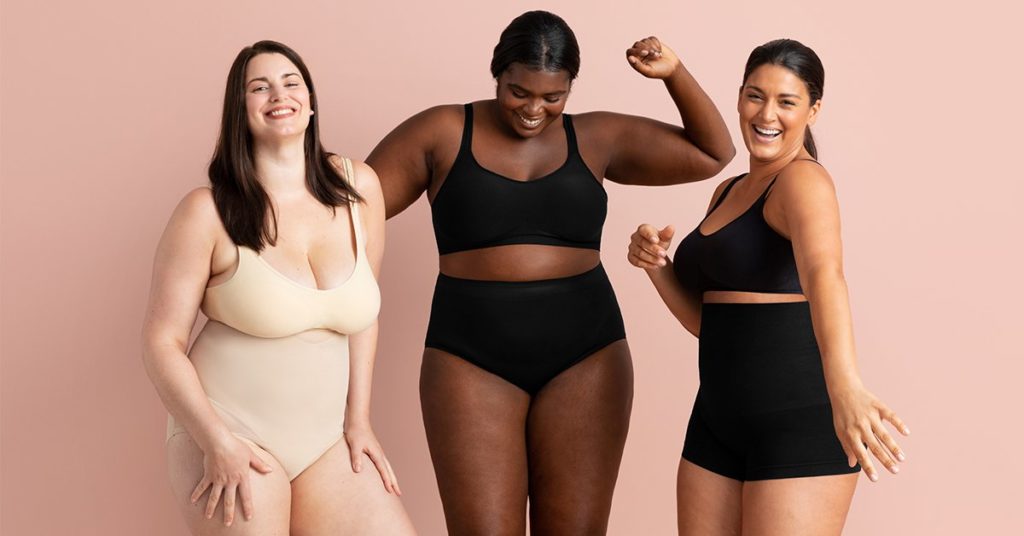
“Girl, you’re thick!”
I’ve been hearing that phrase everywhere lately, and every time I do, I pause. Is it a compliment, a description, a trend, or just a new label for something old? The question stuck with me because words about our bodies don’t just describe us, they shape how we see ourselves. So I decided to find out what thick really means, whether it’s the same as chubby, and what science actually says about body types and health.
Let’s Decode the Word “Thick”
In today’s slang, thick is usually song as praise. It often refers to someone with a fuller, curvier figure (think wider hips, thicker thighs, and a defined waist). A look that is widely admired in modern beauty culture. But it’s important to note that thick isn’t a medical term, rather, it’s a social label. And social labels change.
Years ago, ultra-slim was the ideal. Today, curves trend. Tomorrow, it could be something else. Remember, trends evolve while human bodies don’t.
Let’s Talk Science
Scientifically, natural body builds fall into three somatotypes, namely.
- Ectomorphs: these are naturally slim people, who find it hard to gain weight.
- Endomorphs: they have softer, rounder builds and gain weight more easily.
- Mesomorphs: they are naturally athletic and tend to gain or lose weight without much effort.
Most people aren’t purely one type but a mix. For instance, someone may have a slimmer upper body with fuller hips and thighs, or slimmer limbs with more fat around the midsection. Interestingly, what people often call thick today resembles one of these mixed builds, but that’s a cultural interpretation, not a scientific category.
So is Thick the Same as Chubby?
So is thick the same as chubby? Not quite. Chubby usually describes having noticeable extra body fat overall, while thick often refers to curves concentrated in certain areas, sometimes alongside muscle tone or definition. In simple terms, chubby describes fat distribution while thick describes shape and perception.
Let’s Talk BMI
If you want a more objective view of your body in relation to health, a commonly used tool is Body Mass Index (BMI), calculated as weight in kilograms divided by height in meters squared. A BMI roughly between 19 and 25 is considered healthy, 25 to 30 overweight, and above 30 obese. Although, it isn’t considered a perfect system because it doesn’t distinguish fat from muscle, but it can be a useful starting point for understanding potential health risks.
Let’s Talk Why Health Matters More Than Labels
Regardless of what society calls your body, excessive body fat can increase the risk of conditions like heart disease, high blood pressure, diabetes, joint pain, and high cholesterol. Still, appearance alone doesn’t determine health. Someone can look slim and be unhealthy, while someone else can look curvy and be fit. Looks don’t tell the full story, lifestyle does.
After all my thinking and research, I came to one clear conclusion:
Compliments are nice, but health matters more, and confidence matters most. You don’t need to chase a trending body type to feel beautiful, and you don’t need labels to validate your shape. In the end, the best body type isn’t thick, slim, or curvy. It’s healthy and happy. Also, your body is nothing to be ashamed of. If you want to improve certain areas, do it in ways that support your health, not punish your body. You should always reach out to a qualified health professional that can guide you toward the safest and most effective plan.